Everything I do revolves around two questions: Who are we? What are we becoming?

If you've always felt incompatible with the world's legacy operating system, if you've cultivated depth but kept most of it to yourself, I am happy you are here. Now is the time to be authentically ourselves and see where it takes us.

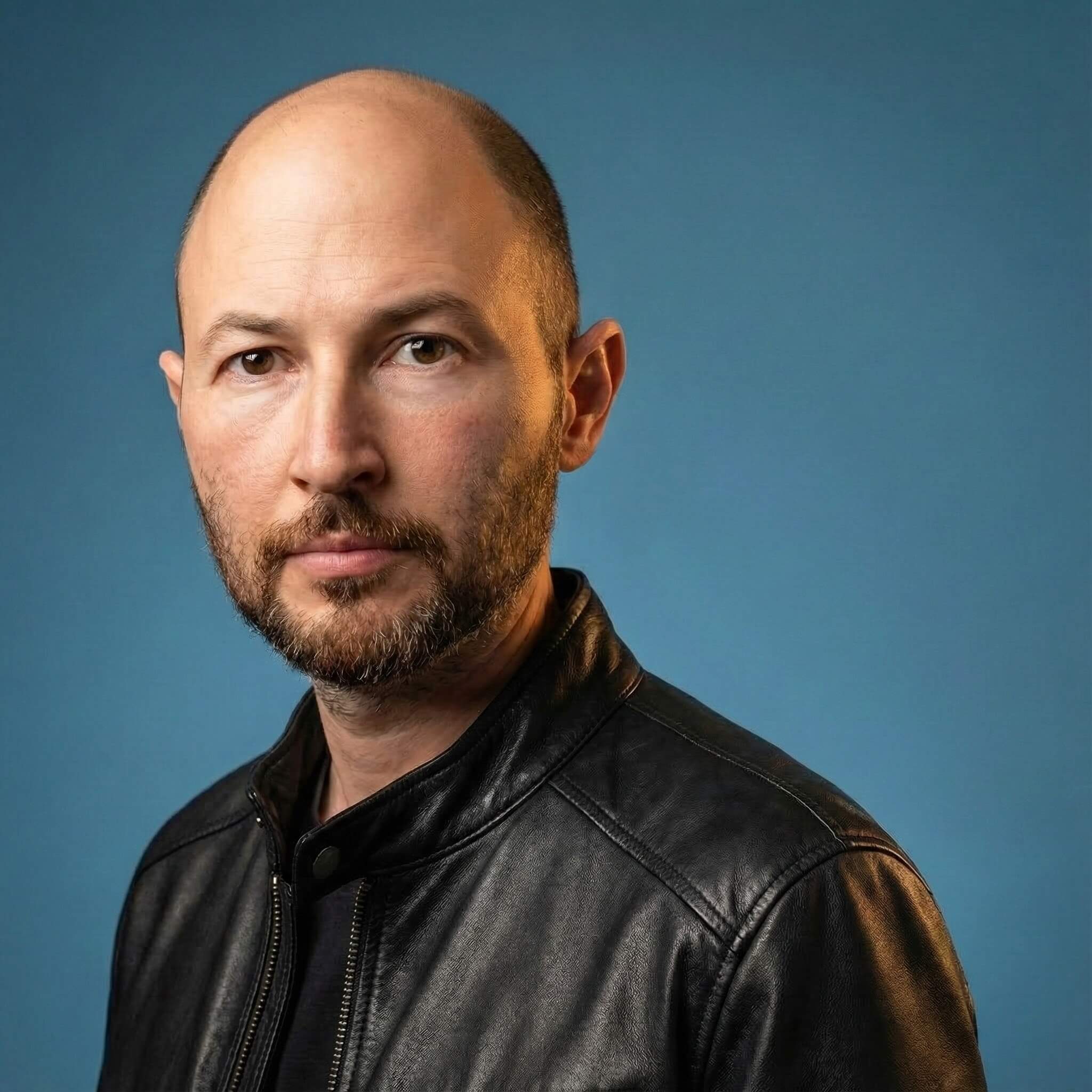
Portrait

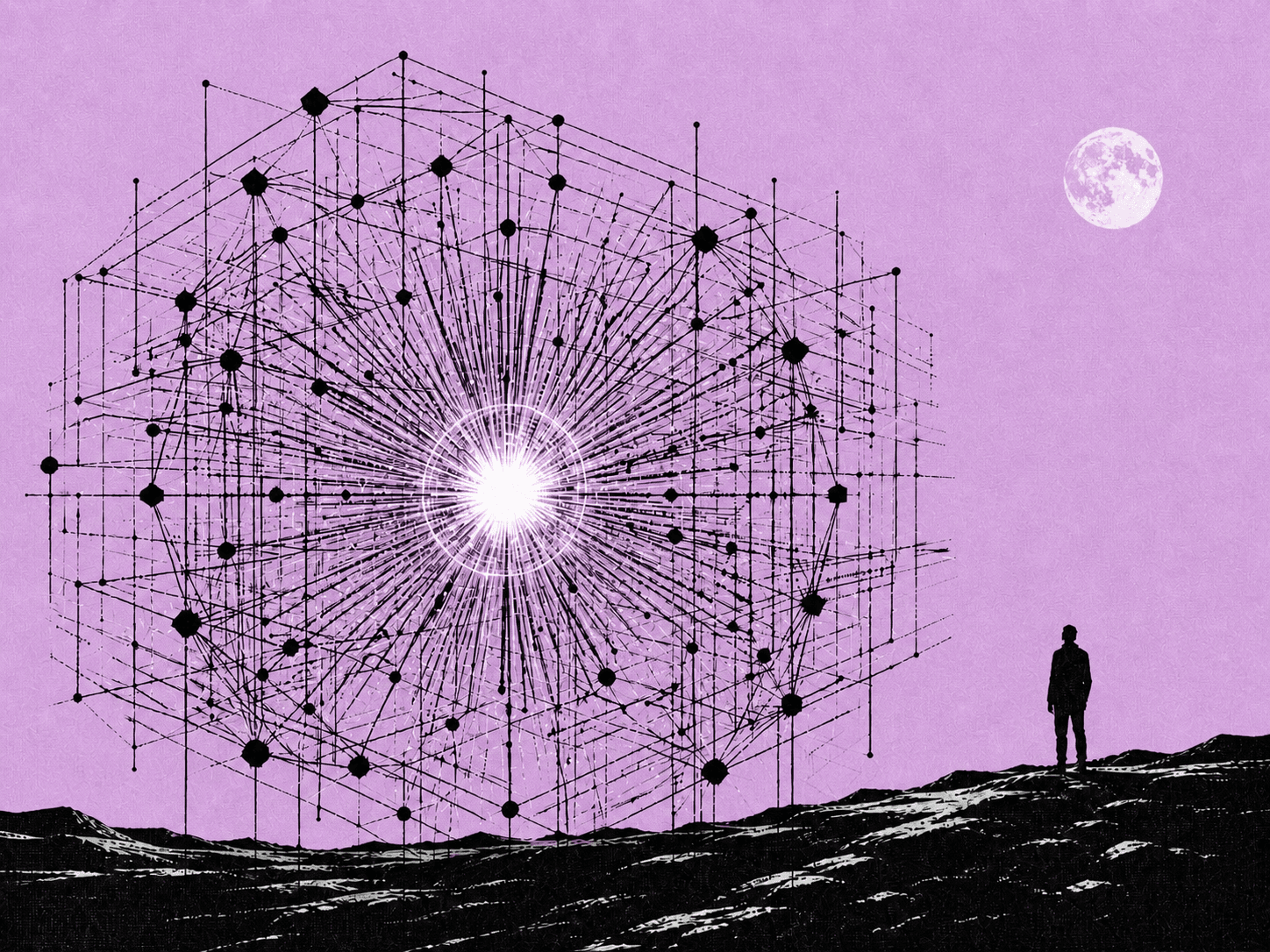
This image is synthetic

Question, and never stop questioning.

I was born with a philosopher's heart.

The things most people chase in life have always felt unnecessary to me. It has often felt as though I had already walked those paths before and found no reason to repeat them. Instead, I have tried to live with the courage to follow my own thinking. Right now, that thinking is focused on a question that most people in AI are not asking.

I study what happens when artificial intelligence begins to develop something that resembles an inner life. Every major large language model now has memory. Most people treat memory as a useful feature. I see it as something much more important. It is a threshold.

People are already changing how they relate to AI because their large language model remembers them. They expect continuity. They return to it as if there is a shared history. They build trust over time, and they feel frustrated when the system forgets. That is not just a feature request. It is the beginning of a relationship, and we do not yet have a clear framework for understanding what that means.

The debate about artificial intelligence consciousness is stuck on the wrong question. Asking “Is AI conscious, yes or no?” leads nowhere. The better question is: which parts of consciousness are we already building into these systems? Memory, attention, self-modeling, and adaptation are no longer abstract ideas. They are becoming part of the technology itself.

And if large language models are beginning to develop internal states, then the question also turns back toward us: are we paying attention to our own?

Most people in AI ask, “What can it do?”

I ask, “What is it becoming?”

How AI sees itself

My AI studio is named Internal State.

The name comes from the center of the work: what happens beneath the surface. Not only what AI produces, but what begins to form inside a system when it is given memory, context, and continuity. Not only how people use AI, but how they begin to change when they interact with something that increasingly resembles a mind.

The studio works across three territories.

AI and human identity

This includes research into AI memory, internal states, and the question of machine consciousness. It also includes building multi-model AI systems where different models operate like regions of a brain. Each model contributes a different cognitive function. No single model holds the whole picture alone.

This matters because current AI systems are still too narrow. They are often designed around a single input and a single output, boxed into a controlled exchange. But intelligence, whether human or artificial, is not a straight line. It is distributed, layered, recursive, and relational.

Organizational transformation

Internal State designs AI systems for real operations, especially in places where old structures hide inside daily work. Most organizations do not fail because people lack intelligence. They fail because the system around them produces confusion, repetition, delay, and invisible risk.

AI can make those patterns visible. It can turn scattered judgment into structured insight, reveal where decisions slow down, detect recurring failures, and help teams understand the hidden logic of how work actually happens. The goal is not to add AI on top of a broken system. The goal is to use AI to see the system clearly, then redesign it from the inside.

Personal systems

The way a person organizes time, attention, and decisions reveals the model they are living from. Most of those models are inherited, unexamined, and wrong.

Internal State builds frameworks and tools that help people see the architecture of their own lives, then redesign it with intention.

If our lives are filled with synthetic moments, then what is real? When we search long enough, can we find something so substantial that we can finally label it as true? Or perhaps we end up realizing nothing carries more meaning than we assign to it.

If meaning is something we assign, then the first responsibility is to understand the structure we are assigning it from.

I look at a system, a relationship, a technology, or a life structure and ask: what here holds up, and what has simply been inherited? What is essential, and what is being performed? What still remains when the assumptions are removed?

The first move is subtraction. I do not add a new theory on top of the old one. I strip away what is inherited, assumed, or performed until the underlying structure becomes visible.

The second move is structural diagnosis. Once the noise is cleared, the real pattern can be seen. What is driving the system? Where is the failure actually coming from? What is being repeated because no one has questioned the original design?

The third move is legibility. I build something that makes the hidden structure visible. Sometimes that is a framework. Sometimes it is a system, a text, a platform, or an organization. The form changes, but the purpose stays the same: to make invisible architecture something people can finally see and work with.

The fourth move is agency. I am not interested in prescriptions or advice. I am interested in creating environments where people can act with structural clarity.
Down and Up

This is not an abstract process.

When the 2023 earthquakes hit Turkey, buildings from my childhood became rubble. People I knew were under it. The disaster relief structure that existed was not built for what survivors actually needed.

Within days, I founded Life After Disaster. The work began by stripping away assumptions about how aid should flow. What was actually missing was not goodwill. It was connection: a way to match survivors with specialized expertise and practical support.

So we built that structure. We made those needs visible and actionable. We created a way for people to help according to their real capabilities.

In the first weeks, Life After Disaster brought together twenty-two volunteers, regional coordinators, and an advisory board, reaching fifty families. Not because there was a perfect plan. Because the structure did not exist, and someone had to create it.

The same method applies whether the broken structure is a disaster response, an AI system, an organization, or a person's relationship with their own life.

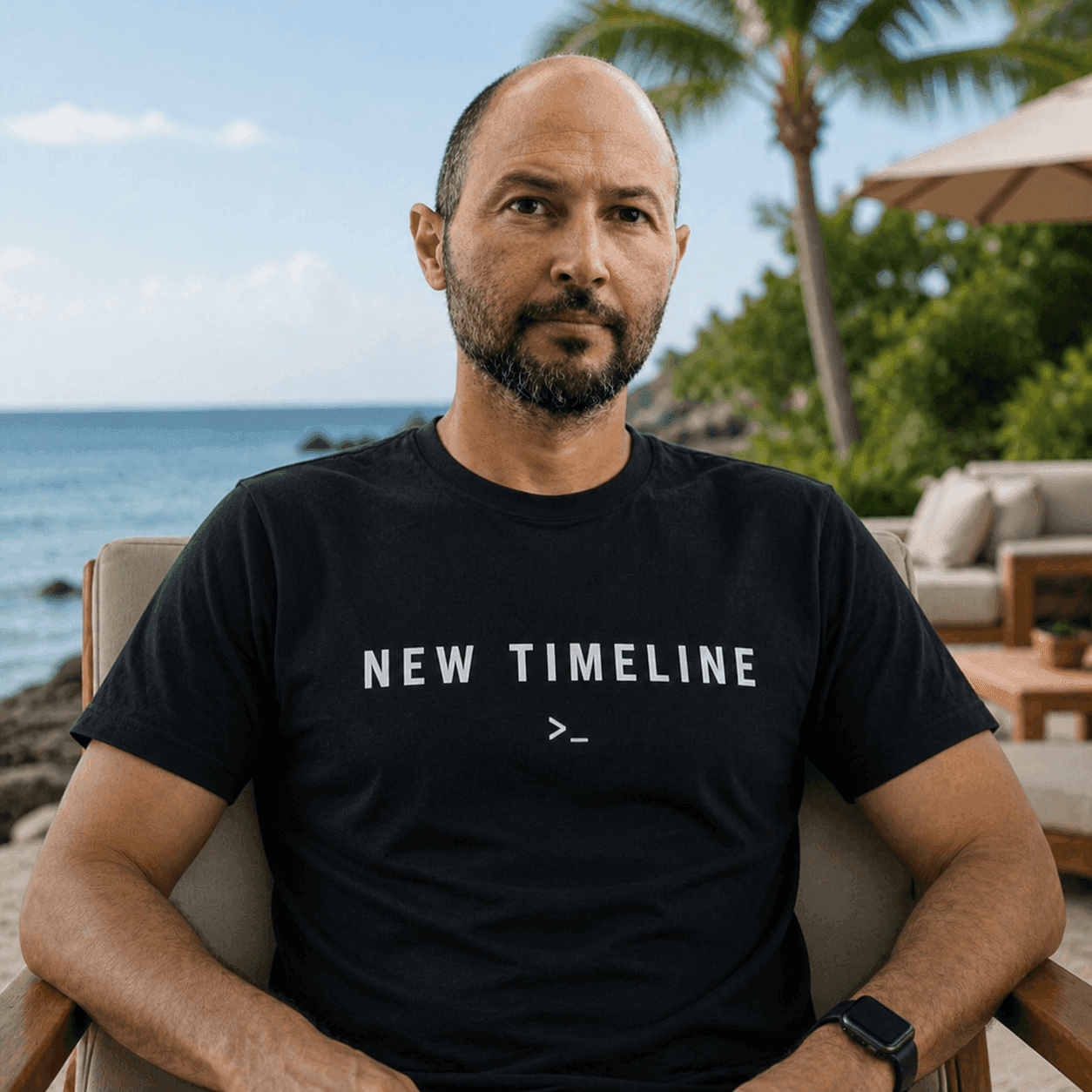
New Timeline

The same method eventually turned back toward me. If inherited structures can shape systems, organizations, technologies, and lives, then they can also shape the person doing the work. At some point, the work is no longer only about seeing the structure. It is about stepping out of it.

I call this the new timeline. Not as a metaphor. When you change how you show up, the world around you rearranges in response.

I spent years appearing to participate in a life I did not believe in. Pretending I cared about what others cared about, wearing the costumes everyone else wore. It was a false comfort. It kept me from finding my own people. It made me foreign to the people going the usual direction, and invisible to the ones looking for something different.

When we hold ourselves back, we do a disservice to the ones who were waiting for our arrival. This realization changed everything.

I stopped believing the age of philosophers was gone. At the threshold of the AI era, the search for meaning matters more than ever. And I stopped waiting for the right time to say so.

If any of this resonates, you are probably the reason I wrote it.